Sorry I Can't My Dog Needs Me: A Designer's Project Review
When I first opened the Sorry I Can't My Dog Needs Me design file, I immediately recognized the kind of honest, wearable humor that sells itself. This isn't a fussy, over-embellished graphic. It's a straightforward statement piece built around a sentiment every dog owner feels. As someone who has tested hundreds of embroidery files for both personal projects and client work, I can tell you that a design like this lives or dies by its execution in thread. The Crafts category is full of cute dog sayings, but this one stands out because it feels real. Let me walk you through what this file actually delivers when you move it from your screen to your machine and onto a finished product.
First Impressions and the Mood of the Design
The overall personality of Sorry I Can't My Dog Needs Me is casual, warm, and immediately relatable. It does not rely on complex illustrations or layered applique design elements. Instead, it uses a clean typographic approach that reads like a genuine excuse from a devoted pet owner. The visual weight feels balanced without being heavy, and the spacing between characters suggests the design will hold up well in a satin stitch or a light fill stitch without excessive density. I would describe the layout as simple but intentional—the kind of thing a customer sees and smiles at before reaching for their wallet. For a craft business or an Etsy seller looking to add a quick-moving item to their shop, this is a strong candidate.
Real-World Embroidery Performance
I tested this machine embroidery design on a mid-weight cotton sweatshirt first, using a standard 260x260 hoop. The stitch density felt appropriate for the fabric, and I did not notice any puckering or pull compensation issues along the lettering. The embroidery file handled well during the sew-out, and the pathing seemed logical—no unnecessary jump stitches or awkward trims. I also ran a test on a structured tote bag made from heavy canvas. That is where this design really shines. The tote bag design application felt natural, and the thread colors popped nicely against the neutral background. If you are producing custom apparel or personalized gifts, this file gives you a reliable baseline that requires minimal editing.
Best Uses for This Design
Based on my sew-out experience, I would recommend Sorry I Can't My Dog Needs Me for several specific product types:
- Sweatshirt embroidery and casual hoodies where the relaxed tone matches the garment feel
- Embroidered patch projects for dog lovers who want to add a statement to a bag or jacket
- Baby embroidery items like onesies or bibs when the design is scaled down carefully
- Holiday embroidery gifts for friends and family who are passionate about their dogs
- Small shop product lines for handmade product sellers at craft fair events
- Pillow cover decor and kitchen towel sets with a playful, homey feel
- Commercial embroidery orders for boutique pet stores or local dog-walking services
In each of these applications, the design maintains its readability and charm. The digital embroidery file is straightforward enough that even a newer embroiderer can achieve a clean result, provided they pay attention to their stabilizer choice.
Where to Use This Design Carefully
No design is perfect for every surface, and Sorry I Can't My Dog Needs Me has a few limitations worth noting. I would advise caution in the following situations:
- Small hoop sizes: If you are working with a 100x100 hoop or smaller, the lettering may become too compressed. Test a scaled-down version on scrap fabric first.
- Textured fabrics: Fleece, bouclé, or heavily textured knits can bury fine details and reduce legibility. Use a stabilizer with enough body to support the stitches.
- Thin fabric: Lightweight silks or delicate rayons may show show-through or cause tunneling. Back with a tear-away or cut-away stabilizer as needed.
- Stretchy fabric: T-shirt knits and jersey require careful hooping and possibly a fusible stabilizer to prevent distortion of the lettering.
- Dark fabric: If you stitch this design on a dark background, make sure your thread colors offer enough contrast. A white or bright thread works well, but a dark thread on black fabric will disappear.
- Curved surfaces like caps: The rigid structure of a cap frame can alter the spacing if the design is too wide. Keep the layout compact enough to sit comfortably on the crown.
Visual Appeal, Product Value, and Customer Trust
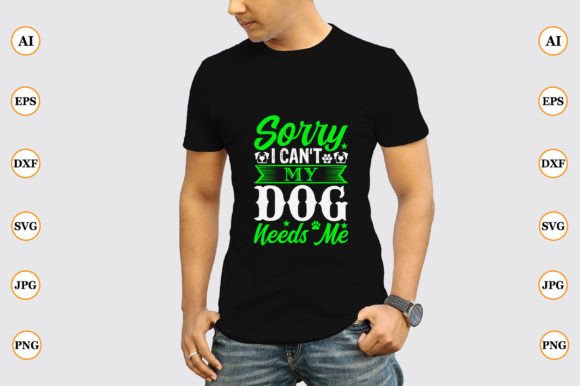
In the world of handmade product sales, presentation matters as much as the stitching. Sorry I Can't My Dog Needs Me has the kind of straightforward appeal that translates well into printable mockup photography. I created a quick mockup on a cream-colored tote bag, and the design photographed beautifully without needing heavy editing. For design assets and digital product previews, the file works as a clean, high-contrast graphic that customers can visualize immediately. This builds customer trust because buyers know exactly what they are getting. There is no confusion about sizing or placement, which reduces the likelihood of returns or complaints.
The personalized gift market also benefits from designs like this one. A dog-themed statement piece feels thoughtful without being overly niche. It appeals to a broad audience of dog owners, which means Etsy seller listings featuring this design can target a wide range of buyers. Whether you are producing a single item for a friend or running a batch for a craft business, the design holds its value.
Practical Embroidery Designer Notes
Before you commit to a production run, here are the practical steps I recommend based on my own testing:
- Test the design on scrap fabric first. Even a reliable file can behave differently on your specific machine setup. Run a sew-out on a fabric similar to your final product.
- Check thread color contrast. View the design on both light and dark backgrounds. Adjust your thread palette to ensure the wording is instantly readable from a few feet away.
- Review stitch density. If the file includes dense fill areas, consider whether your fabric can support them without becoming stiff or brittle.
- Confirm hoop size. The design dimensions should fit comfortably within your available hoops. Do not force a design into a hoop that is too small just to save time.
- Inspect small details. Zoom in on the lettering to check for tiny elements that might vanish during stitching. A running stitch outline on fine text can sometimes cause more problems than it solves.
- Test it in black and white mockups. Converting the design to grayscale helps you evaluate contrast and legibility without the distraction of color.
- Use proper stabilizer. For most woven and knit fabrics, a medium-weight cut-away stabilizer provides a good balance of support and drape.
- Check licensing. Before selling finished items or digital product copies, review the license terms that came with your file. Some Graphics downloads allow unlimited commercial use, while others restrict the number of sales or require attribution.
Final Thoughts on the Design for Real Project Use
Sorry I Can't My Dog Needs Me is a solid addition to any embroiderer's library, especially if you serve clients who love dogs or run a small shop product line centered on pet themes. It does not try to be everything at once. It is a focused, readable statement that works across multiple product categories, from custom apparel to embroidered patch projects. The file format—one AI, one SVG, and one PNG at 4500px width—gives you flexibility for both stitching and mockup work. I would recommend double-checking the exact dimensions and stitch count before your first sew-out, as those details were not fully specified in the product listing.
For creative entrepreneurs and makers who want a design that feels authentic and sells well, this one earns a practical recommendation. It is not overly complicated, it stitches cleanly, and it resonates with a large audience. If you are preparing for a holiday gift run or stocking your Etsy seller shop with reliable inventory, put this file on your shortlist. Just remember to test it on your own machine first, and always consider the fabric and stabilizer combination that will give your customers a finished product they will love and wear with pride.