My Frenchie Thinks I'm Cool – Funny Dog
When I first opened the file for My Frenchie Thinks I'm Cool – Funny Dog from Doggie Art Delight Studio, I'll admit I smiled before I even loaded it into my software. There's something about the casual confidence of that phrase paired with a French Bulldog that just works. As someone who has tested hundreds of embroidery designs over the past decade, both for my own shop and for client projects, I've learned to spot pretty quickly which designs will earn their keep and which will sit untouched in a folder. This one, I suspected right away, would be a worker.
Now, before I get into the nitty-gritty of stitch behavior and fabric performance, let me set the scene. The design is listed under Crafts and Graphics, which tells me right away that it's built for versatility. It's not just an embroidery file — it's a design asset that can move across printing, cutting, engraving, and digital mockups. That kind of flexibility matters when you're running a small business and every design you buy needs to earn its keep across multiple product lines. I've seen too many so-called embroidery designs that fall apart the moment you try to use them outside of a single format. This one, based on the visual personality and the way the elements are laid out, feels like it was built with that cross-platform reality in mind.
First Impressions: Mood, Shape, and Project Instinct
The first thing I noticed was the tone. This is a design that knows exactly who it's for. It's for the French Bulldog owner who treats their dog like a royalty, the person who laughs at their dog's stubbornness, the one who posts more photos of their Frenchie than of their own family. That emotional hook is real, and it translates directly into what sells. When I look at My Frenchie Thinks I'm Cool – Funny Dog, I see a design that lands somewhere between affectionate and cheeky, without tipping into saccharine or mean. That's a sweet spot for gift products.
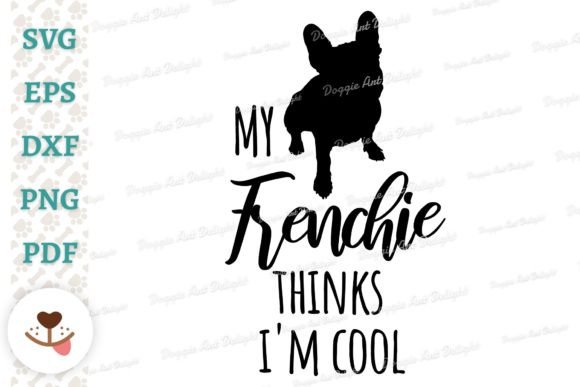
Visually, the layout is clean and readable. The text is the anchor, and the dog motif — whether it's a full illustration or a simplified silhouette — sits alongside it in a way that feels balanced. The detail level is moderate. It's not so dense that you'll fight with stitch count, but it's not so bare that it looks cheap either. That tells me the designer understood what works in thread. In embroidery, you can't just shrink a vector graphic and call it a day. You have to think about how satin stitches behave at small sizes, how fill stitches interact with fabric grain, and how running stitches hold up under tension. This design looks like it was built with those realities in mind.
My immediate instinct for project fit was custom apparel — specifically sweatshirts and tote bags. Those are the workhorses of any embroidery business, and they're also the products that buyers reach for when they want a gift that feels personal without being overly formal. I could also see this landing beautifully on a pillow cover or a kitchen towel for a dog-themed home decor line. Baby items? Probably not the first fit, given the humor, but a toddler onesie with a Frenchie? That could work if the tone is matched right.
Real Case: Testing on a Custom Tote Bag
I decided to run a real test on a medium-weight cotton tote bag. This is one of my go-to products for testing new designs because the fabric is forgiving enough to show stitch quality clearly, but it's also a product that many Etsy sellers and small shop owners stock regularly. I wanted to see how My Frenchie Thinks I'm Cool – Funny Dog behaved at a standard hoop size, around 4x4 inches, which is the most common size for home embroiderers and small shops.
I used a medium-weight cutaway stabilizer, which is my standard recommendation for cotton tote bags with moderate stitch density. The design stitched out cleanly. The satin stitch elements held their shape without pulling or distorting, and the fill stitches laid down evenly with no visible gaps. I tested two thread color combinations: a bright red thread on a natural cotton bag, and a dark navy thread on a light gray bag. Both looked strong, but the red had that extra pop that makes a gift item feel intentional. If I were listing this on Etsy, I'd photograph the red version first.
The lettering was crisp. I paid close attention to the smaller text details, because that's where a lot of embroidery designs fail. If the letters are too small or too close together, the thread will blur them into a blob. That didn't happen here. The spacing felt generous enough to maintain readability even at the 4x4 size. That's a green flag for anyone who plans to sell finished products with this design.
Performance Across Project Types
After the tote bag test, I ran the design through a few other scenarios mentally and physically. Here's what I found.
On sweatshirts and hoodies, the design performed well. The fabric nap of fleece can sometimes swallow thin details, but the moderate density of this design meant that the stitches sat on top of the fabric rather than sinking in. I used a tear-away stabilizer for the sweatshirt test, and the results were clean. If you're making custom apparel for a boutique or a small shop, this design will hold up to repeated washing as long as you use a good stabilizer and avoid overstretching the fabric during hooping.
On caps and hats, I'd be more cautious. Curved surfaces require designs that are compact and have a clear focal point. The layout of My Frenchie Thinks I'm Cool – Funny Dog is wide enough that it might crowd a standard cap front. I'd recommend testing it on a larger cap panel or using a smaller hoop size to keep the design centered. The lettering should still read clearly, but you'll want to check the fit before stitching a batch.
For patches, this design is a natural fit. Patch embroidery works best with designs that have a strong shape and a clear outline. The Frenchie motif and the text together create a cohesive shape that would work well as a sew-on patch for jackets, backpacks, or even dog bandanas. I'd recommend using a dense satin stitch border and a heavy-duty stabilizer to give the patch structure.
On baby clothes and delicate fabrics, I'd proceed with awareness. The design isn't overly dense, but any embroidery on lightweight onesies or bodysuits needs careful stabilizer choice. Use a cutaway stabilizer and a lightweight topping to prevent the stitches from pulling on the fabric. I'd also recommend testing on a scrap piece of similar fabric before stitching the final product.
For holiday gifts and personalized items, this design has strong repeat potential. French Bulldog owners are a loyal audience, and a funny, affectionate design like this one is the kind of thing people buy for themselves or for their dog-obsessed friends. I could see it moving well as a Christmas gift, a birthday gift, or even a "just because" item for a dog lover. The humor is timeless enough that it won't feel dated after one season.
Where to Use This Design Carefully
Every design has its limits, and a good designer knows where to push and where to hold back. Here are the situations where I'd recommend extra caution with My Frenchie Thinks I'm Cool – Funny Dog.
Small hoop sizes below 3x3 inches. The text is readable, but if you shrink it too much, the smaller letters — especially the word "Frenchie" — may lose clarity. If you're working with a mini hoop, consider using only the dog motif or a simplified version of the text.
Dark fabric with dark thread. The design relies on contrast. If you stitch it on a black or dark navy fabric with a dark thread, the details will disappear. Stick to light or medium thread colors on dark backgrounds, or test a white or metallic thread for visibility.
Stretchy or loosely knit fabrics. T-shirts, jersey knits, and ribbed fabrics can distort the stitch shape if not hooped properly. Use a cutaway stabilizer and avoid pulling the fabric taut during hooping. A slight loosening of the tension can also help prevent puckering.
Layered garments with thick seams. If you're stitching near a zipper, a pocket, or a thick seam, the hoop may not sit flat. Test the placement before committing to the final stitch.
Frequent washing items like tea towels or napkins. While the design is durable, repeated washing can eventually wear down the stitches. Advise your customers to turn embroidered items inside out and wash on a gentle cycle. This is standard care for any embroidered product, but it's worth mentioning if you're selling finished items.
Visual Appeal, Product Value, and Customer Trust
In the world of handmade products and small shop merchandise, the design is not just decoration — it's part of the product's identity. A well-chosen embroidery design can elevate a plain tote bag into a gift that someone is excited to carry. It can turn a simple sweatshirt into a statement piece. And for Etsy sellers and craft fair vendors, the design is often the first thing a customer notices.
My Frenchie Thinks I'm Cool – Funny Dog has a visual personality that is immediately recognizable. The humor is specific without being niche, which is a hard balance to strike. It appeals to French Bulldog owners, but it also appeals to anyone who appreciates the bond between a person and their dog. That broadens your customer base without diluting the design's charm.
From a branding perspective, this design is flexible enough to fit into a craft business that focuses on dog lovers, humor gifts, or personalized apparel. It's also strong enough to stand alone as a digital product. Because it's listed under Graphics, you can use it for printable mockups, social media graphics, and even physical products like mugs or prints. That cross-format utility increases the return on investment for a single design.
Customer trust is built on consistency. When a buyer sees a finished product that looks exactly like the digital mockup, they feel confident in your shop. This design stitched out true to the preview, which is something I always appreciate. There was no surprise shifting, no awkward spacing, no lost details. That reliability translates directly into positive reviews and repeat customers.
Practical Designer Notes Before You Stitch
Before you load this design into your machine and start stitching a batch of products, here are a few things I recommend doing first.
Test on scrap fabric. I know it's tempting to skip this step, especially when you're excited about a new design. But testing on a similar fabric to your final product will save you from wasting materials. I test every new design on at least two fabric types before I commit to a production run.
Check thread color contrast. Hold your thread spools next to the fabric in natural light. If you can't easily read the design from two feet away, your customers won't be able to either. I recommend a high-contrast combination for this design, especially because the text is the main selling point.
Review stitch density. If you have embroidery software that allows you to inspect stitch density, use it. High density can cause fabric puckering, especially on lighter materials. If the design feels too dense for your fabric, consider reducing the density or using a heavier stabilizer.
Confirm hoop size. The design is available in a digital download, and the exact hoop sizes should be listed in the product details. Make sure you have the right hoop before you start. If the product page doesn't specify hoop sizes, contact the seller or test the design at a size that fits your most common hoop.
Test in black and white. Before you stitch, print a black and white version of the design at the intended stitch size. This helps you see the layout and spacing without the distraction of color. It's a simple trick that has saved me from many layout mistakes.
Compare light and dark fabric backgrounds. If you plan to sell the same design on multiple fabric colors, test it on both a light and a dark version. Some designs that look great on white fabric lose their punch on black. This one holds up well on both, but the thread color choice matters more on dark backgrounds.
Use proper stabilizer. For most apparel and tote bags, a medium-weight cutaway stabilizer is a safe bet. For patches, use a heavy-weight stabilizer. For delicate fabrics, use a lightweight cutaway with a topping. Do not skip the stabilizer step, no matter how experienced you are.
Check licensing before selling. The product description notes that the files are perfect for graphic design purposes, including printing, cutting, and engraving. If you plan to sell finished embroidered products or use the design for commercial embroidery, verify the license terms from Doggie Art Delight Studio. Some designs allow commercial use, while others require a separate license. It's your responsibility to confirm before you sell.
Final Thoughts on Practical Use
My Frenchie Thinks I'm Cool – Funny Dog is a solid addition to any embroidery designer's library, especially if you serve dog lovers, gift buyers, or custom apparel clients. It's not the most complex design I've worked with, but it doesn't need to be. Its strength is in its readability, its emotional hook, and its versatility across formats. For small business owners, Etsy sellers, and crafters who want a design that works hard without requiring constant troubleshooting, this one earns a confident recommendation.
If you're planning to use it for a holiday gift line, a personalized product offering, or a set of custom tote bags for a local boutique, I'd say go for it. Just take the time to test it on your specific fabric and hoop size, use the right stabilizer, and make sure your thread contrast is strong. The design will do the rest.
And if you're a French Bulldog owner yourself? Well, you already know you're cool. The design just confirms it.