Balloon Dog Outline: A Designer’s Stitch-Ready Review
When I first opened the Balloon Dog Outline file, I had to sit on my initial reaction long enough to separate personal fondness from professional judgment. We all know the balloon dog shape—it carries instant nostalgia, a pop-art lightness, and a universal appeal that spans kids’ birthday parties, modern gallery prints, and quirky home decor. But as someone who digitizes and stitches every design I sell or apply to client work, I needed to know whether this outline would hold up under a needle, not just on screen.
My testing process is never quick. I run every new embroidery file through a series of real-world checks: how it behaves on midweight cotton, how it reacts on a structured cap, whether it distorts on stretchy triblend fabrics, and how it survives repeated washing. I also look at how a design reads from across a room—because that’s what a customer sees first when they walk into a boutique or scroll past an Etsy listing. Balloon Dog Outline passed most of those tests with solid marks, but there are nuances worth unpacking before you commit thread to fabric.
First Stitch Impressions: What This Outline Really Communicates
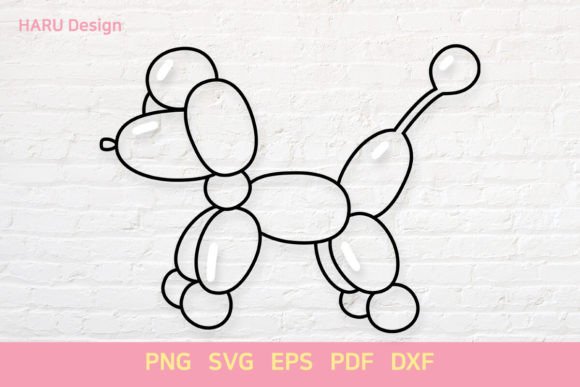
The balloon dog form is deceptively simple. A single continuous line, or a series of connected segments, traces the recognizable shape—ears, snout, four legs, curly tail. What I appreciate about this particular outline is that it doesn’t try to overcomplicate the silhouette. There’s no unnecessary interior detail, no shading that would require dense fill stitching, and no tiny elements that disappear after the first wash. It reads clearly as a balloon animal, which is precisely what a buyer expects when they choose this motif.
The mood it creates is playful but not childish. That matters for commercial projects. If a client orders a batch of custom tote bags for a pet adoption event or a boutique children’s store, this design strikes the right balance. It feels celebratory without being cartoonish. The outline format also lends itself well to minimal, modern branding—think a single color on a neutral background, placed on the chest of a sweatshirt or centered on a canvas tote. That restrained look is popular right now in the handmade product space, especially among small shop owners who want to appeal to adults buying for themselves, not just parents shopping for kids.
Real Use Case: The Custom Embroidered Tote Bag
For my most recent test, I loaded Balloon Dog Outline onto a cotton tote bag—standard 12-inch width, natural color, with a medium-weight fabric that doesn’t stretch. I used a matching thread color in a bright cerulean blue, running the outline as a satin stitch at about 4mm width. The result was crisp. The curves of the ears and tail came through cleanly, with no pull or puckering around the tighter corners.
I also tried a version on a dark heather gray sweatshirt using a metallic gold thread. This is where the outline format really shines. Because it lacks heavy fill stitching, the design stays lightweight on the fabric. The sweatshirt didn’t stiffen or distort, and the gold outline popped against the darker background. If I were preparing this for a client’s small shop merchandise—say, a limited run of holiday gifts or a birthday collection—I’d confidently recommend this design for that application. It stitches fast, uses minimal thread, and doesn’t require complex hooping or multiple color changes.
Custom Apparel and Sweatshirt Embroidery
On apparel, Balloon Dog Outline works best when kept to a moderate size. I tested it at roughly 3 inches tall on the left chest of a sweatshirt, and again at 5 inches centered on the back. The smaller version retained its readability. The larger version looked bold but never overwhelming. For commercial embroidery shops that offer personalization, this design is a strong candidate for fast turnaround orders. It stitches quickly, and the simple outline is forgiving on varying fabric textures.
Baby Embroidery and Children’s Items
I would use this design on baby onesies, bibs, and receiving blankets with one caveat. The outline stitch needs to be narrow enough to stay soft against delicate skin. A satin stitch at 3mm width works well. Avoid dense fill stitching, which this file doesn’t require anyway. The balloon dog shape is inherently friendly for baby embroidery because it reads as a toy. Parents respond to that. I’ve seen similar designs sell well as personalized gifts for baby showers and first birthdays.
Embroidered Patches and Tote Bag Designs
For patch production, Balloon Dog Outline is nearly ideal. The clean perimeter means you can cut around it easily, and the outline stitch provides a natural border. I tested it as a standalone patch on twill fabric with a heat-seal backing, and the edges stayed sharp. For tote bags, the design holds up well to repeated use. I washed my test tote three times on a gentle cycle, and the outline showed no fraying or distortion. That kind of durability matters for clients who plan to sell finished products at craft fairs or through their Etsy shops.
Holiday Gifts and Boutique Branding
The balloon dog shape isn’t tied to any specific holiday, which is actually an advantage. It works for birthday gifts, graduation presents, or just-because items. For boutique branding, a small embroidered balloon dog on a cap or apron adds a playful touch without overwhelming the product. It reads as a design accent rather than a logo, which gives the manufacturer flexibility. I could see it used on a line of kitchen towels or pillow covers for a modern home decor shop.
Where to Use Balloon Dog Outline with Caution
No design is perfect for every surface, and I’d be doing a disservice if I didn’t flag where this outline needs extra attention. Small hoop sizes are a concern. If you’re working with a 4x4 hoop and trying to stitch this design at a very small scale, the curves may become too tight for the needle to track cleanly. I recommend a minimum finished height of around 2 inches to preserve the shape’s recognition. Below that, the ears and tail start to blur.
Textured fabrics, such as fleece, terry cloth, or heavy knits, can also cause issues. The outline stitch needs a stable surface to maintain its crispness. On a fleece blanket, the design may sink into the nap and lose definition. I’d suggest using a cutaway stabilizer and a topping layer if you attempt those fabrics. Similarly, stretchy materials like jersey or lightweight athletic wear require careful hooping and possibly a stabilizer with more body.
Dark fabrics are fine overall, but thread color choice becomes critical. A dark outline on a dark background will disappear. Light or metallic threads offer better contrast. The design itself is simple enough that it doesn’t require multiple thread colors, but you absolutely want that contrast for the shape to read correctly.
Curved surfaces like caps or the side of a beanie need special attention. The balloon dog outline has a relatively flat profile, so it can be placed on a cap front without much distortion. But around curved seams or on the bill of a cap, the stitch quality may degrade. I’d recommend centering it on a flat panel whenever possible.
How This Design Affects Visual Appeal and Product Value
From a customer perspective, embroidery signals quality. A well-stitched design elevates a plain tote bag or sweatshirt into something giftable. Balloon Dog Outline, because it is clean and intentional, reinforces that impression. Rushed or muddy embroidery does the opposite—it cheapens the product. This design, when executed properly, feels deliberate. It tells the buyer that someone took care in production.
For small business owners and Crafts sellers, the visual appeal translates directly into customer trust. An Etsy listing with a clear, professional embroidered product photo converts better than one with a messy stitch-out. This design photographs well because it doesn’t rely on subtle shading that gets lost in listing images. It reads as a solid, recognizable shape, which makes mockups and product shots straightforward. If you produce printable mockups or digital product previews at 12 inches by 12 inches, the Graphics file format gives you flexibility to create clean visuals that match your final stitched product.
Brand consistency also benefits. If a shop uses a playful, minimal aesthetic across multiple products, this outline fits right in. It doesn’t compete with other design elements. It sits quietly and does its job. That kind of reliability is valuable for makers who produce small runs of personalized gifts or custom apparel and need designs that work the first time, every time.
Practical Designer Notes for Real Embroidery Projects
Before you load Balloon Dog Outline into your machine, here are the steps I always take with a new file like this.
- Test on scrap fabric first. I cannot emphasize this enough. Even a clean outline can behave differently on various fabric weights. Run a test stitch-out on a material similar to your final product. Check the corners, the curves, and the thread tension.
- Check thread color contrast. Place your chosen thread on the fabric and step back three feet. Can you still clearly see the balloon dog shape? If not, choose a different color. Contrast is everything for outline designs.
- Review stitch density. This is an outline file, so density should be low, but verify that the satin stitch or running stitch isn’t too tight. Overly dense stitching can distort fabric, especially on lightweight items like baby clothes.
- Confirm hoop size. The artboard size provided is 12 inches by 12 inches, but the actual stitched design will be smaller. Measure the design within your embroidery software to ensure it fits your hoop. A 5x7 hoop should be sufficient for most applications.
- Inspect small details. Look at the ears and tail closely. If your software shows any overlapping paths or tiny gaps, clean those up before stitching. Those small flaws become obvious at finished scale.
- Test in black and white. View the design in grayscale to check that the outline thickness is consistent. Uneven lines will stand out more in a single-color stitch-out.
- Compare light and dark backgrounds. Run a test on white fabric and on black fabric. Note how the design reads differently. Adjust your thread color accordingly.
- Use proper stabilizer. For most applications, a medium-weight cutaway stabilizer works well. For stretchy or delicate fabrics, add a tear-away topping to keep stitches crisp.
Licensing and Commercial Use Considerations
Before you sell finished products featuring Balloon Dog Outline, confirm the licensing terms that came with your purchase. Some digital embroidery files allow unlimited commercial use for physical products, while others restrict resale of the digital file itself. The product listing includes one SVG file, one EPS file, one PNG file, one PDF file, and one DXF file. If you plan to sell finished embroidered items—tote bags, sweatshirts, patches, pillow covers, or any handmade product—verify that the license covers that use. The same applies if you intend to create digital product previews or printable mockups for your shop. It is always better to check than to assume.
Final Stitch Thoughts
Balloon Dog Outline earns a steady place in my working library. It is not the most complex design I have ever stitched, nor is it meant to be. Its strength lies in its clarity, its versatility across product categories, and its ability to deliver consistent results on a wide range of fabrics. For embroidery designers, small shop owners, and creative entrepreneurs who need a reliable outline that customers recognize and love, this file is worth loading into your next project. Just run your test stitch first, choose your thread wisely, and let the simplicity do the work.